https://raybrown.bluemusicgroup.com
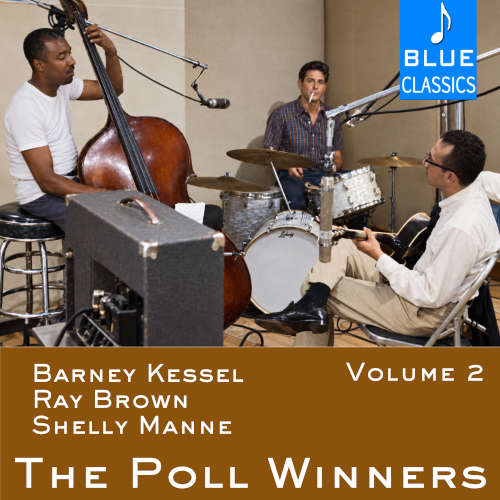 The Poll Winners Vol 2
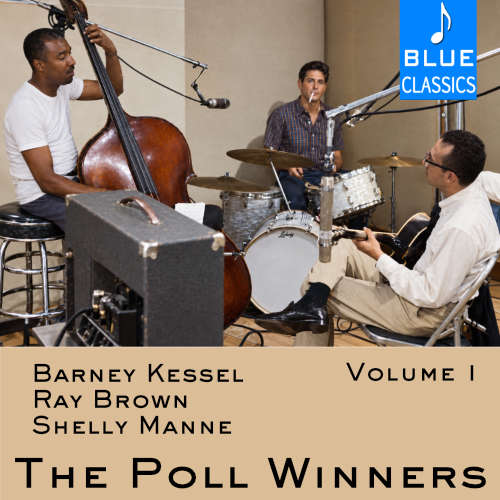 The Poll Winners Vol 1
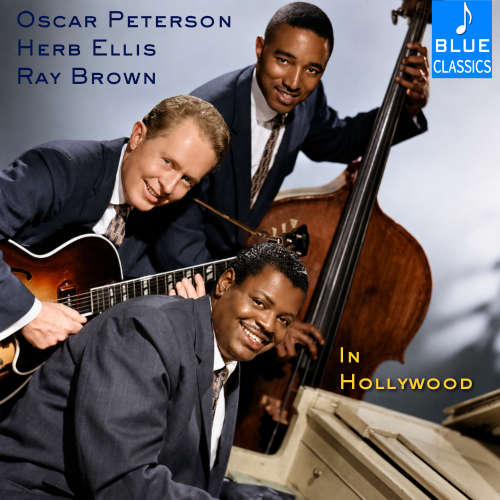 In Hollywood
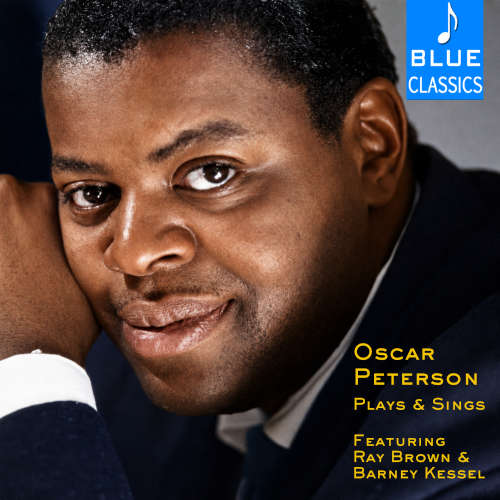 Oscar Peterson Plays & Sings
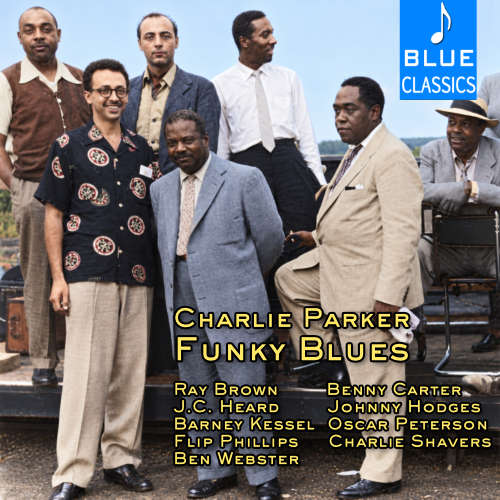 Funky Blues
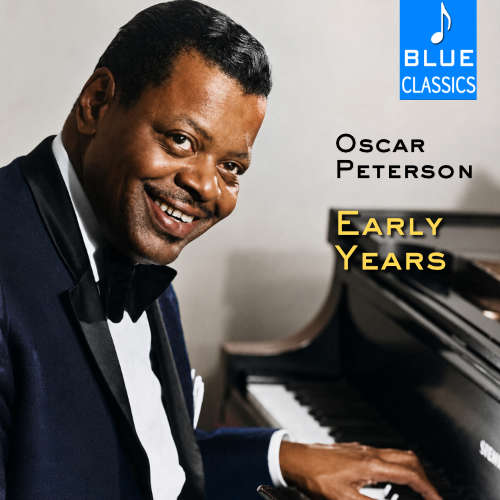 Early Years
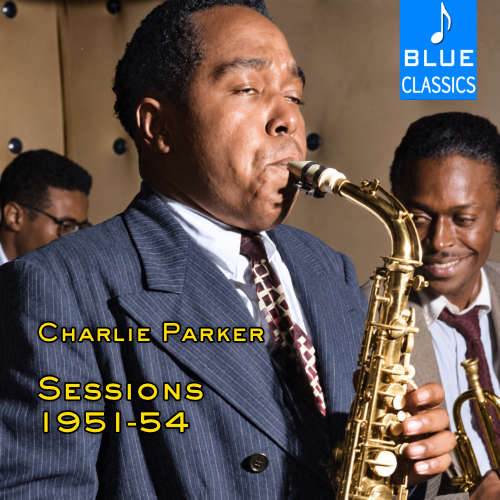 Sessions 1951-54
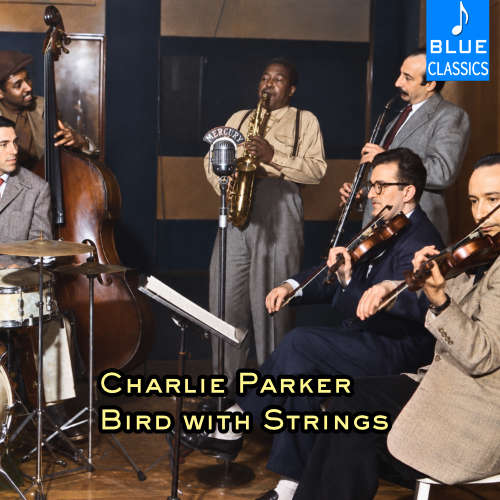 Bird with Strings

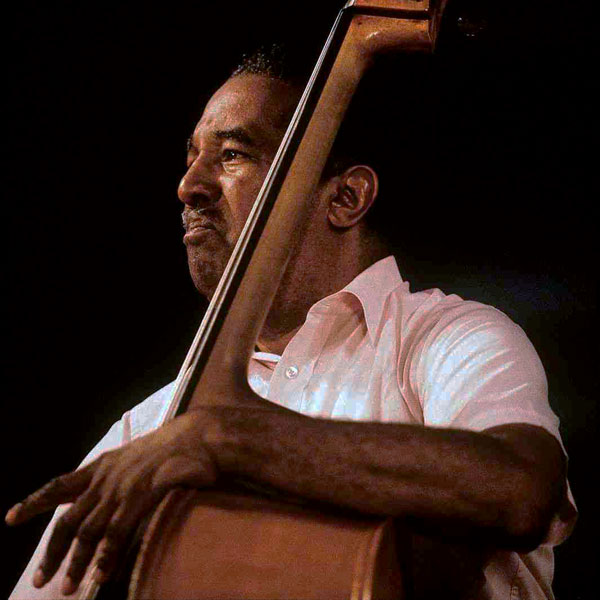
Ray Brown - bassist
Ray Brown (b. October 13, 1926 – d. July 2, 2002) was an American jazz double bassist whose career extended from the mid-1940s into the beginning of the 21st century. He became particularly associated with Dizzy Gillespie, Charlie Parker, Ella Fitzgerald, Oscar Peterson, and Jazz at the Philharmonic, and his work with Oscar Peterson made him one of the most frequently heard bassists in postwar jazz. He was also a composer, bandleader, educator, manager, and promoter.Brown was born on October 13, 1926, in Pittsburgh, Pennsylvania. He took piano lessons from the age of eight, but while attending high school he became interested in the double bass. There were already many pianists competing for places in the school orchestra, and Brown initially considered playing trombone before taking up the bass instead. His teacher regarded him as a serious student, and Brown practiced extensively. Among his early musical influences was Jimmy Blanton, Duke Ellington's bassist, whose rhythmic approach made a strong impression on him.
Brown was already working professionally while still in his teens. His first professional engagement was in a Pittsburgh club in 1943, and in 1944 he toured with the Jimmy Hinsley Sextet and Snookum Russell's band. After graduating from high school in 1944, he decided to move to New York, arriving there in 1945 at the age of 19. The move immediately placed him in the centre of the city's developing bebop scene.
Brown's arrival in New York was closely connected with Dizzy Gillespie, Charlie Parker, and Bud Powell. According to accounts of his career, he met Gillespie and Parker almost immediately and was hired by Gillespie. Brown became a member of Gillespie's small groups and subsequently his big band. He toured California with Gillespie in 1946, returned to New York, and continued with Gillespie's innovative large ensemble. Brown's playing can also be seen in the 1947 film Jivin' in Be-Bop.
His work during these years placed him directly within the development of bebop. Rather than functioning only as a timekeeper, Brown provided a strong harmonic foundation while responding actively to the phrasing and rhythmic ideas of the soloists. His bass playing became associated with a full, resonant tone, clear articulation, and precise rhythmic placement. AllMusic describes his sound as large and comfortable, while the National Endowment for the Arts emphasizes his dexterity and rich tone.
Brown was also becoming increasingly involved with Norman Granz's Jazz at the Philharmonic. He began working regularly with the organisation from the late 1940s, participating in the concert tours that brought leading jazz musicians together in different cities. The tours became an important part of Brown's professional life and eventually took him around the world.
In 1947, Brown married singer Ella Fitzgerald. Their marriage lasted until 1952. Brown became closely involved in Fitzgerald's professional work and served as her musical director on her solo and Jazz at the Philharmonic tours. The two also recorded together extensively. Their professional relationship continued after their marriage ended, and Brown remained an important musical collaborator in Fitzgerald's career.
During the late 1940s Brown also worked with Milt Jackson and other musicians who would later form the Modern Jazz Quartet. In 1948, Brown formed a trio with pianist Hank Jones and drummer Charlie Smith. Around the same period he was participating in a broad range of recording sessions, from bebop groups to vocal accompaniment.
A major turning point came through Jazz at the Philharmonic and Norman Granz's relationship with Oscar Peterson. Brown met Peterson through the Philharmonic tours, and in 1951 he joined what became the Oscar Peterson Trio. Peterson, Brown, and, from 1953, guitarist Herb Ellis, developed a highly interactive piano-bass-guitar format. Brown remained with Peterson until 1966.
The Peterson trio brought Brown an international audience and a large body of recordings. The trio's approach allowed the bass to become more than accompaniment: Brown could articulate harmonic movement, establish rhythmic direction, and respond directly to Peterson's phrasing. The combination of Peterson's piano and Brown's bass became one of the defining small-group partnerships of the period. Brown also continued to appear with other artists and on Jazz at the Philharmonic tours while working with Peterson.
Brown's recorded work during the 1950s extended well beyond the Peterson Trio. He recorded with Ella Fitzgerald, Dizzy Gillespie, Milt Jackson, Lester Young, and many other musicians. He became one of the most frequently employed bassists in jazz, and his ability to adapt to different musical situations was an important part of his professional reputation.
During the late 1950s Brown also began playing cello, following an interest that had developed alongside his work on double bass. In 1960, a hybrid instrument combining features of the cello and double bass was constructed for him. It became an unusual addition to his musical activities and was related to his later interest in the smaller, higher-pitched bass instruments that eventually became known as piccolo basses.
Brown left the Oscar Peterson Trio in 1966 and moved to Los Angeles, where he worked as a freelance and studio musician. He became involved in recording, arranging, management, and other aspects of the music business. He also worked as a manager for musicians including members of the Modern Jazz Quartet and Quincy Jones.
In the 1970s Brown returned increasingly to touring and small-group work. In 1974, he helped establish the L.A. Four, a quartet with guitarist Laurindo Almeida, saxophonist and flutist Bud Shank, and drummer Shelly Manne. The group combined jazz with elements of chamber music and Brazilian-influenced repertoire and became an important part of Brown's later career.
Brown also increasingly worked as an educator. He wrote instructional material for bass and served as a mentor to younger musicians. Among the musicians who acknowledged his influence were later-generation bassists including John Clayton and Christian McBride. His work as an educator complemented his continuing activity as a performer and recording musician.
During the 1980s and 1990s Brown continued touring and recording with his own groups and as a collaborator. He became increasingly involved in presenting younger musicians, and his later recordings included the Some of My Best Friends Are... series for Telarc, in which he recorded with a range of established and younger jazz musicians.
Brown received numerous honors during his later years. In 1995 he was named an NEA Jazz Master and received an honorary Doctor of Music from Berklee College of Music. He continued working as a performer, composer, educator, and mentor. In 2001 he received the Austrian Cross of Honour for Science and Art, 1st class, and in 2003 he was inducted into the DownBeat Jazz Hall of Fame.
Ray Brown died on July 2, 2002, in Indianapolis, Indiana, at the age of 75. His professional career had lasted almost sixty years. From his first professional work in Pittsburgh, through bebop and Jazz at the Philharmonic, his long association with Oscar Peterson and Ella Fitzgerald, and his later work in Los Angeles and with younger musicians, Brown maintained a presence across several generations of jazz.
Brown's recordings remain an extensive record of the changing role of the jazz bassist during the second half of the twentieth century. His playing can be heard in small bebop groups, vocal sessions, concert ensembles, piano trios, and his own later projects. His career also illustrates the increasingly international nature of jazz after the Second World War, as musicians such as Brown moved between clubs, recording studios, concert tours, radio broadcasts, and international festivals.